Good news
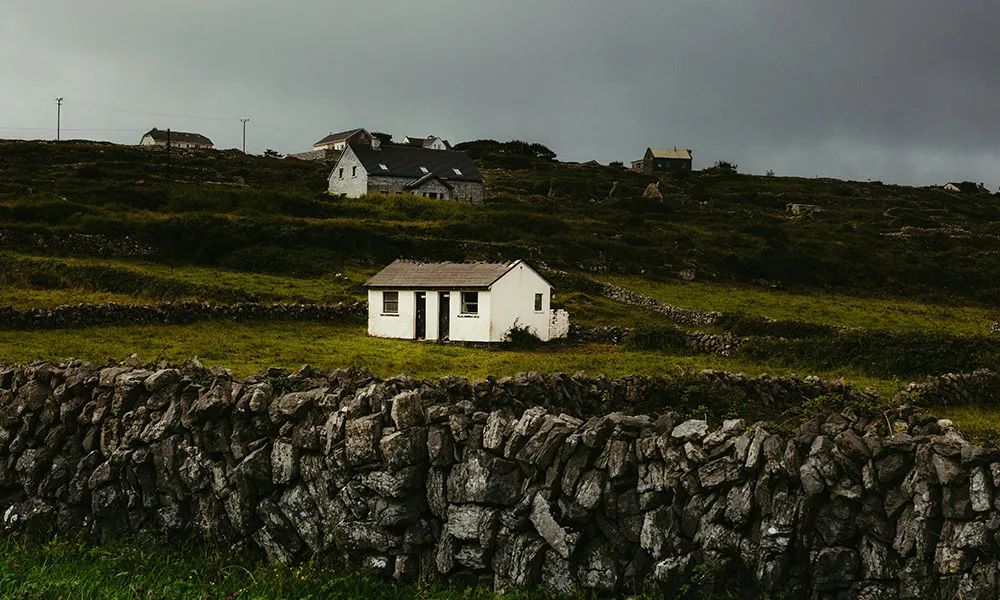
Last month, Minister for Housing James Browne announced plans to relax planning regulations for one-off rural homes in Ireland, aiming to reverse strict, long-standing restrictions. According to the Minister, new planning guidelines for local authorities will be introduced by summer 2026, making it easier for people to build on their own land.
The Minister’s announcement confirms the government’s intention to "liberalise" rules regarding one-off, rural, single-house construction to address difficulties in securing planning permission. This would likely see an end to the notorious “five-in-a-row” rule which allows local authorities the right to refuse planning permission on the grounds that there are too many houses clustered together along the same road front. The abolition of this rule, which frankly was absurd to begin with, will come as welcome news to many farming families.
The Minister’s announcement contained more good news, as he confirmed that the new 2026 guidelines will be mandatory. This means that all local authorities will be required to follow them via a new national planning statement. We can hope that such a move will lend planning applicants considerable legal credibility in the event of a rejection on spurious “cosmetic” grounds.
Finalised plans should be scrutinised
The announcement comes as part of a broader push to address rural housing needs by allowing more flexibility in the planning system; and while it offers a glimmer of hope to many Irish farming families, the details of the finalised plan must be carefully scrutinised by farming organisations.
It is noteworthy, for instance, that there has been no mention of relaxing the rules regarding site suitability for septic tank installation. As things stand, there are strict codes of practice for site assessment in place, which make it extremely difficult to get planning permission for new "once-off" rural housing on certain, “heavy” soil types. Unless these restrictions are eased, a de-facto ban on rural development will remain in place in some regions.
Willow bed systems are part of the solution
We must avoid an outcome where a de-facto two-tier planning system is put in place for rural Ireland, whereby farmers on better land can get planning permission but those farming heavier soils continue to face insurmountable restrictions. This can be achieved if the new government plan allows for the inclusion of willow bed systems for septic tank installation.
These systems, otherwise known as willow evapotranspiration systems, offer an excellent means of addressing percolation shortfalls on wetter sites. In heavy clay soils where traditional percolation fails (often called high "T-values"), they use the natural "pumping" action of willow trees to process wastewater. This approach works because willows have exceptionally high water uptake rates. They absorb the effluent and release it into the atmosphere as water vapor (evapotranspiration), theoretically requiring little to no discharge into the ground. The trees also filter and break down contaminants, specifically capturing nitrogen and phosphorus that would otherwise run off into local waterways.
In conclusion
The decision to relax planning restrictions for rural Ireland is long overdue and very welcome. However, the new rules should not forget about those farming families whose land is largely constituted of heavier soil types, as this will result in an unacceptable two-tier system whereby some of Ireland’s most financially threatened farmers are excluded from building on their own land.
The willow-bed system offers an environmentally sustainable and highly efficient means of offsetting pollution risks from one-off septic tank systems on heavy soil sites. On that basis, it should be considered a viable solution and placed at the heart of any future Government plans regarding rural development.