In last week’s entry, we looked at the ideal winter feeding rates for sheep. This week, we continue this series by considering ideal feed ratios for cattle. In order to achieve optimal gains and maintain health, it is important that every animal receives rations appropriate to age, size and breed.
Silage quality and concentrates
Rations will also vary depending on the quality of your silage, we recommend feeding your best quality silage to growing cattle and cattle that are close to finishing. Slightly poorer quality silage is often fine for dry cows, but nutrient status should always be checked at the start of the winter-feeding period.
Concentrates should only be introduced slowly, as rapid transition to concentrate-led diets can cause stomach upset and may be counterproductive. As a general rule, it is a good idea to increase concentrate by 0.5kg every three or four days.
Weight gain and growth targets
It is also a good idea to set targets for animal weight gain. For example, you might want heifers to gain about half a kilo per day. Feed rates should be adjusted to match weight gain objectives.
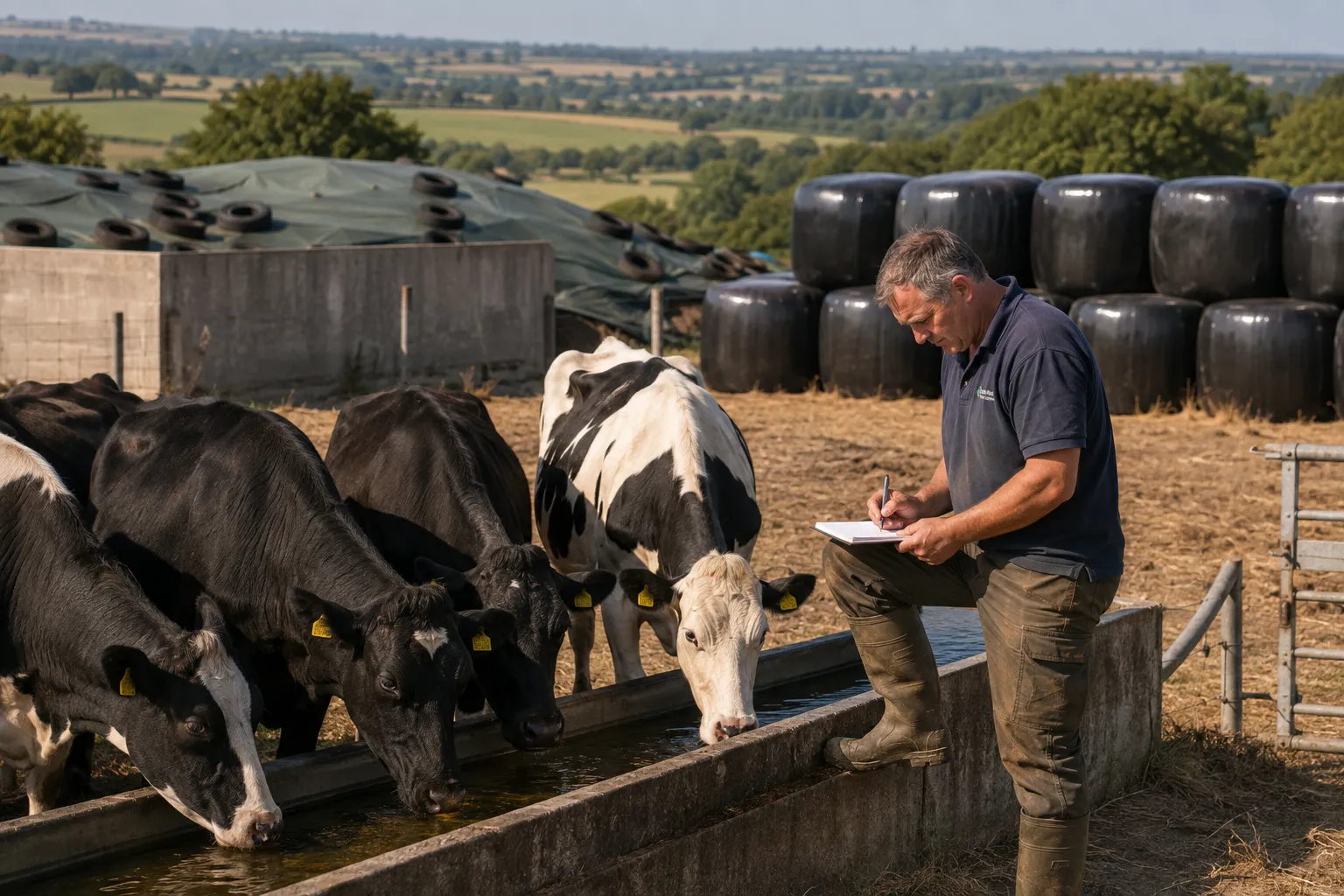
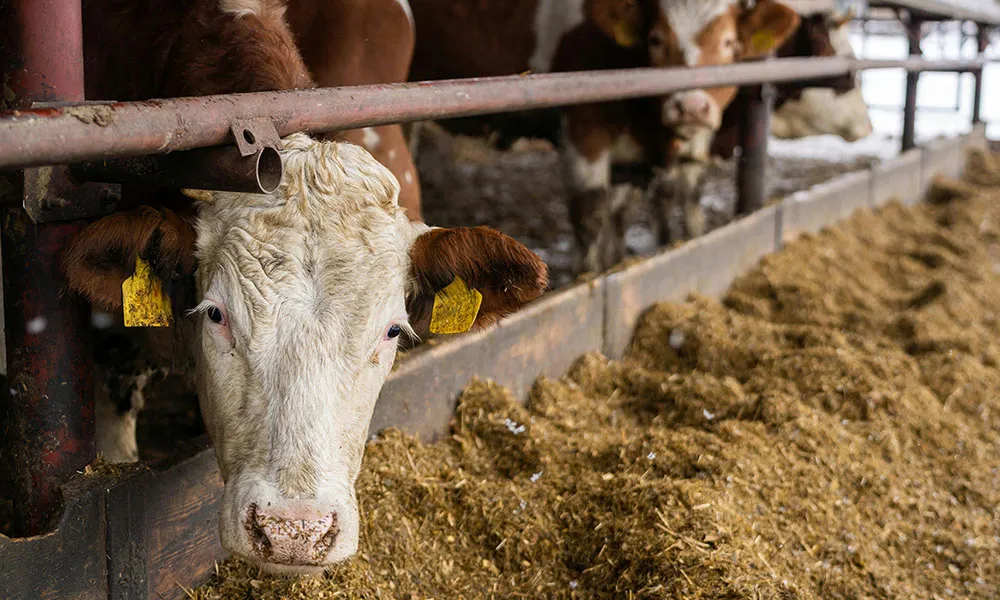
Animals won’t thrive in extremely confined spaces, and will be more prone to disease. You should make sure that each animal has sufficient space to access silage unrestricted. For ad-lib feeding, 400-500mm per animal is recommended. For store cattle, 100mm is usually sufficient, while 200mm is needed for suckler cows.
Feeding ratios
Heifers for finishing: If you are finishing heifers over the winter, you will need to combine high-fibre silage with heavy crude protein rations. First-cut silage offers the best source of fibre, and should be fed ad lib with 5.5.kg of a 14% crude protein ration. If silage is of poorer quality, you may need to increase the amount of crude protein to 6.5kg or 7 kg.
Weanling heifers: Weanling heifers that are being kept for breeding, or intended for sale in the following year, will do fine on ad-lib silage and a smaller ration of crude protein. I would usually feed 2 kg of a 14% crude protein during the winter housing period. This will keep the heifers fit but not overly fat. In this condition, they are more likely to thrive on spring grass come late March or April.
Bull calves: Bull calves can usually be started on a diet similar to that of weanling heifers, with ad-lib silage and a 2-3kg ration of 14% crude protein. You may want to increase the crude protein ration to 3.5kg (approx.) in early spring. This will leave them in a good position to maximise weight gain from early grass.
Suckler cows: Suckler cows are still the backbone of many Irish farms. All cows should have ad-lib access to good quality silage. However, if your silage varies in quality, you should feed the better-quality silage to the younger cows. Older cows will do fine on poorer quality silage, as long as it is not excessively rushy or dusty.
Concentrate should be used sparingly, as you don’t want cows that are too fat coming into the calving season. If giving concentrate, keep an eye for rapid weight gain and reduce accordingly.
Supplementation
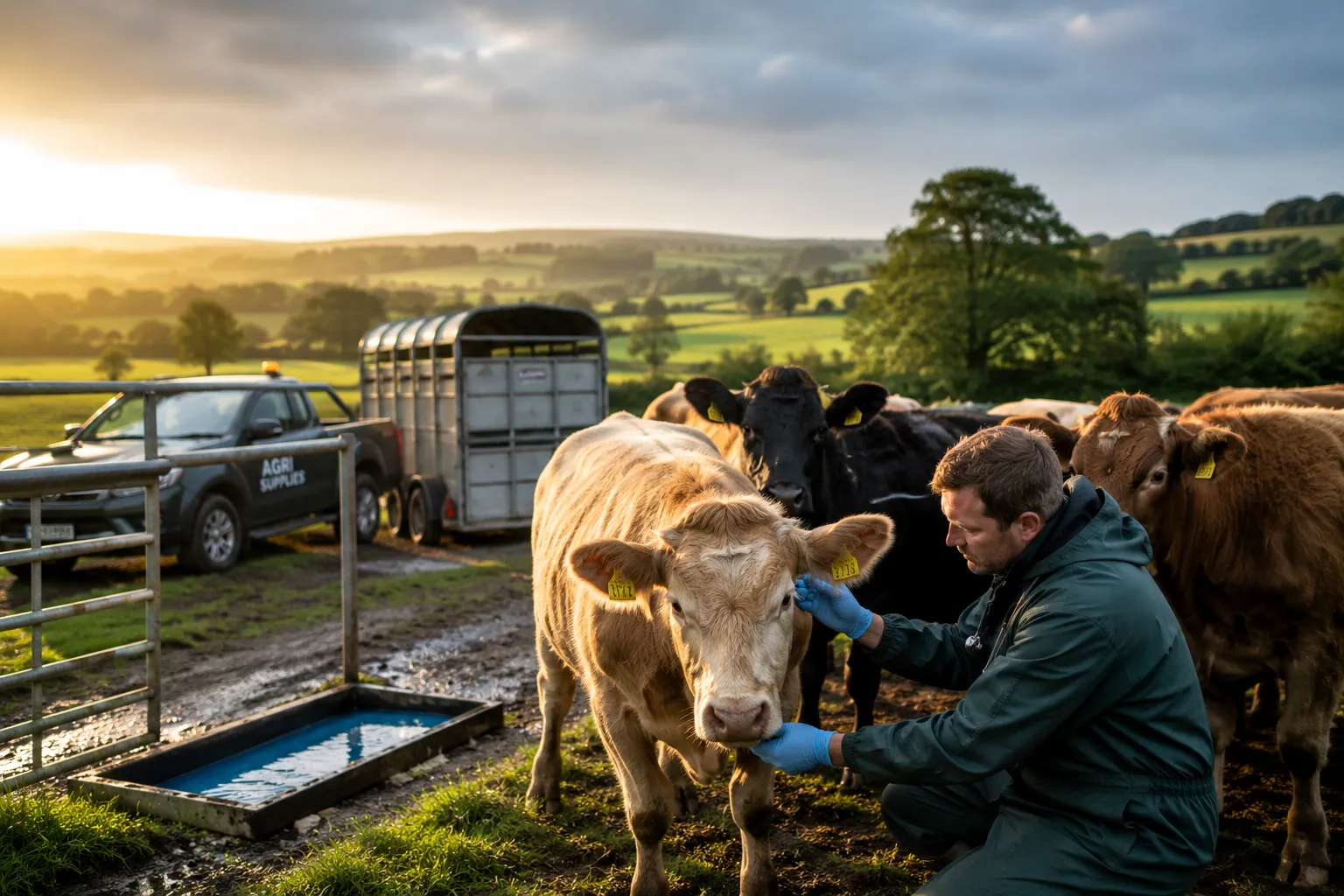
The winter housing season usually places stress on animals’ bodies. To offset the risk of deficiencies, you should supplement with vitamins and minerals.
It is especially important that younger animals – and pregnant cows – receive supplements containing copper, selenium, iodin and zinc. Here at Agridirect.ie, we have a wide range of these supplements available. We recommend that you take the time to consider which option is best for you!