
Teat Sealers and Selective Dry Cow Therapy: Getting More From Your Drying-Off Plan
Most dairy farmers now use teat sealers as standard at drying off. Since the 2022 changes to antibiotic rules, many herds rely on sealer alone for a large share of the herd. That raises the stakes. When a cow gets no antibiotic cover, the sealer and the way it goes in are the only things protecting that quarter for eight to ten weeks.
Here's where the gains are, where things most often go wrong, and what to look for in the products you use.
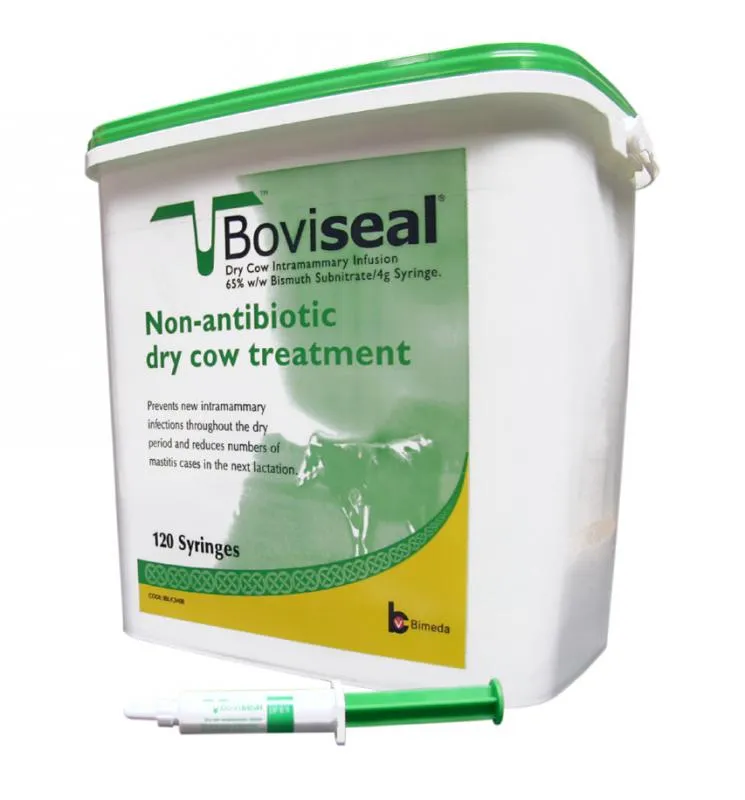
Boviseal and Sureseal: the two we stock
Boviseal and Sureseal are two of the best-known non-antobiotic teat sealers on Irish dairy farms. Both form a physical barrier in the teat that lasts from drying off to calving. Both come in tubs of 120 syringes, which suits drying off in batches.
Both can be used:
- On their own in low-SCC cows selected for sealer-only, or
- After a dry cow antibiotic in cows that need treatment, with the sealer going in second
Whichever you use, how it goes in matters far more than which brand it is.
Choosing cows for sealer-only
Selecting cows for sealer alone is only as good as the data behind it. Before drying off, check:
- Milk recording: ideally at least three recordings in the lactation, with one close to drying off.
- SCC history: cows that stayed consistently low through the lactation are the best candidates. A single low figure after a run of high ones is a warning sign.
- Clinical history: any mastitis case this lactation should prompt a closer look.
- Culture results: for herds with ongoing problems, knowing your main pathogens changes the plan.
Agree the selection criteria with your vet as part of your dry cow plan. Review them each year against your results.
Where sealer-only goes wrong
Most failures aren't failures of the product. They come down to hygiene at infusion and the dry cow environment.
- Contaminated teat ends. Without antibiotic cover, any bacteria pushed into the teat during infusion has nothing to stop it. Outbreaks of severe environmental mastitis after drying off (Pseudomonas, Serratia, coliforms) usually trace back to the infusion routine.
- Rushed drying off. Large batches done at the end of milking, by one tired person, are high risk. Smaller groups, done as a dedicated job, give better results.
- Poor teat end condition. Cows with hyperkeratosis or cracked teat ends are harder to clean properly and slower to form a natural plug. Check liner condition and machine settings well ahead of drying off.
Technique points worth reviewing
Even experienced farmers slip into habits over time. It's worth running through the basics before you start, and with anyone helping you:
- Partial insertion only, which reduces damage to the keratin lining.
- Pinch the teat base and don't massage the sealer up. It needs to sit in the teat, not in the gland cistern.
- When using antibiotic and sealer together, antibiotic first, then sealer, with the teat end cleaned again between them.
- Clean far teats first and infuse near teats first.
- Post-dip, mark cows, record treatments, and keep cows standing for 30 minutes.
The dry period and calving
- Keep lying areas clean and dry, especially in the first two weeks after drying off and the last two weeks before calving.
- Watch for swollen or hot quarters in the days after drying off.
- At calving, strip each quarter out thoroughly at the first milkings to remove the sealer. Follow the product label on how long to keep milk from fresh cows out of the tank. Using a separate cluster or test bucket for fresh cows, and changing filter socks often, helps keep sealer residue out of the bulk tank.
Supporting Your Drying-Off Programme
Boviseal and Sureseal are both available from stock throughout the drying-off season. We also supply everything needed for a hygienic, efficient routine: disposable gloves, teat wipes, surgical spirit, pre- and post-dips, marker sprays, and a 30-litre stainless steel dump bucket for managing fresh cow milk.
Our team is happy to talk through your requirements and make sure you have everything in place before drying off begins.