
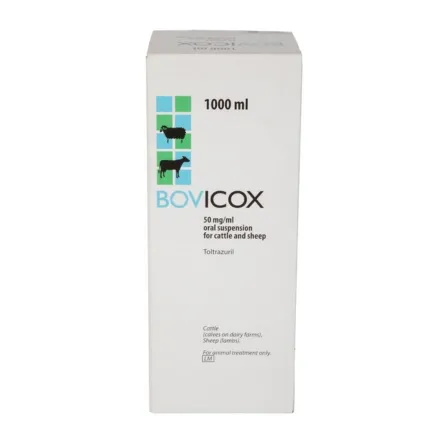
Bovicox (Toltrazuril) 1 Litre
Ireland
Bovicox 50 mg/ml Oral Suspension (Toltrazuril)
Bovicox 50 mg/ml Oral Suspension is an anticoccidial product for calves and lambs containing 50 mg/ml toltrazuril. It is used to prevent clinical signs of coccidiosis and reduce the shedding of coccidia oocysts on farms with a confirmed history of the disease.
Bovicox is administered as a single oral dose before the expected onset of clinical signs. It is authorised for housed dairy replacement calves and lambs under the conditions specified in the product information. Treatment should be combined with good hygiene and management practices to help reduce coccidiosis pressure.
Product Information
| Bovicox Product Details | |
|---|---|
| Active Ingredient | Toltrazuril 50 mg/ml |
| Target Species | Cattle (housed dairy replacement calves) and sheep (lambs) |
| Treats and Controls | Prevention of clinical coccidiosis and reduction of oocyst shedding caused by specified Eimeria species |
| Administration Method | Oral suspension |
| Available Sizes | 1L |
| Marketing Authorisation Holder | J. & M. Veterinary Services Ltd (as stated in the supplied SPC) |
Withdrawal Periods
| Species | Meat & Offal | Milk Withdrawal |
|---|---|---|
| Cattle | 63 days | Not authorised for use in animals producing milk for human consumption |
| Sheep | 42 days | Not authorised for use in animals producing milk for human consumption |
Important: Observe the specified withdrawal periods after treatment. Bovicox must not be used in animals producing milk for human consumption.
What Does Bovicox Treat?
Bovicox is used to prevent clinical signs of coccidiosis and reduce oocyst shedding in susceptible calves and lambs on farms with a confirmed history of the disease.
Cattle - Coccidiosis Prevention
- Eimeria bovis: A coccidia species associated with intestinal disease in calves.
- Eimeria zuernii: Another important cause of coccidiosis in calves.
Authorised Use: Housed calves intended to replace dairy cows producing milk for human consumption. Do not use in calves weighing more than 80 kg or in beef/veal fattening units.
Sheep - Coccidiosis Prevention
- Eimeria crandallis: A coccidia species associated with coccidiosis in lambs.
- Eimeria ovinoidalis: Another important cause of clinical coccidiosis in lambs.
How It Works: Toltrazuril acts against intracellular developmental stages of Eimeria parasites. For maximum benefit, animals should be treated before clinical signs are expected to appear.
Key Features of Bovicox
- Coccidiosis Prevention: Helps prevent clinical signs and reduce oocyst shedding in calves and lambs.
- Single Oral Dose: Administered once at the appropriate species-specific dose rate.
- Targeted Eimeria Control: Acts against the coccidia species specified in the product licence.
- 50 mg/ml Toltrazuril: Contains an anticoccidial active ingredient from the triazine group.
- Farm Management: Can form part of a coccidiosis prevention programme alongside good hygiene and housing management.
Bovicox Dosage for Cattle
Recommended Dose: 3 ml per 10 kg bodyweight, equivalent to 15 mg toltrazuril per kg, administered as a single oral dose.
Important: Bovicox must not be administered to calves weighing more than 80 kg. For groups of calves of the same breed and similar age, dose according to the heaviest animal in the group.
Cattle - Dose and Bottle Coverage
| Weight | Dose | 1L |
|---|---|---|
| 10 kg | 3 ml | 333 |
| 20 kg | 6 ml | 166 |
| 30 kg | 9 ml | 111 |
| 40 kg | 12 ml | 83 |
| 50 kg | 15 ml | 66 |
| 60 kg | 18 ml | 55 |
| 70 kg | 21 ml | 47 |
| 80 kg | 24 ml | 41 |
Bovicox Dosage for Sheep
Recommended Dose: 0.4 ml per kg bodyweight, equivalent to 20 mg toltrazuril per kg, administered as a single oral dose.
When treating groups of lambs, group animals according to bodyweight and dose accordingly to avoid underdosing or overdosing.
Sheep - Dose and Bottle Coverage
| Weight | Dose | 1L |
|---|---|---|
| 5 kg | 2 ml | 500 |
| 10 kg | 4 ml | 250 |
| 15 kg | 6 ml | 166 |
| 20 kg | 8 ml | 125 |
| 25 kg | 10 ml | 100 |
| 30 kg | 12 ml | 83 |
| 35 kg | 14 ml | 71 |
| 40 kg | 16 ml | 62 |
| 45 kg | 18 ml | 55 |
| 50 kg | 20 ml | 50 |
Bottle Coverage: The 1L column shows the number of complete doses available at the stated bodyweight, calculated from the dose volume and rounded down to whole doses. Figures assume no product wastage. Always use correctly calibrated dosing equipment.
Administration Instructions
- Oral Administration: Administer as a single oral dose.
- Shake Before Use: Shake the suspension before administering.
- Accurate Bodyweight: Determine bodyweight as accurately as possible before calculating the dose.
- Correct Timing: Treat before the expected onset of clinical signs to obtain maximum benefit.
- Group Treatment: Treat all calves or lambs in the affected pen as recommended in the SPC, using appropriate bodyweight-based dosing.
- Good Hygiene: Maintain clean, dry housing conditions to help reduce coccidiosis risk.
- Existing Disease: Animals already showing clinical signs such as diarrhoea may require additional supportive treatment under veterinary advice.
Important Safety Information
- Contraindications: Do not use in animals with known hypersensitivity to toltrazuril or any excipient.
- Cattle Restrictions: Do not use in calves weighing more than 80 kg or in beef/veal fattening units.
- Intensively Reared Lambs: Lambs kept indoors throughout their lives under intensive rearing systems must not be treated beyond 6 weeks of age or at a bodyweight above 20 kg.
- Milk-Producing Animals: Not authorised for use in animals producing milk for human consumption.
- Resistance: Frequent or repeated use of antiprotozoals from the same class may contribute to resistance.
- Personal Protection: People with known hypersensitivity to the ingredients should avoid contact. Wash skin or eye splashes immediately with water.
- Environmental Protection - Calves: Manure from treated calves must be diluted with at least three times its weight of manure from mature cows before spreading on land.
- Environmental Protection - Lambs: Manure from intensively reared lambs treated with the product should only be applied to the same piece of land every third year.
- Mixing: Do not mix with other veterinary medicinal products.
- Adverse Reactions: None known according to the supplied SPC.
- Disposal: Dispose of unused product and waste materials in accordance with local requirements.
What Is Coccidiosis?
Coccidiosis is an intestinal disease caused by microscopic parasites called coccidia. Infected animals shed oocysts in their faeces, which can contaminate housing and the surrounding environment.
Clinical signs can include diarrhoea, reduced appetite, poor growth and weakness. Severe infections can cause significant intestinal damage.
Important: Bovicox is intended for prevention before clinical signs develop. Treatment during an established outbreak may have limited benefit for an individual animal because intestinal damage may already have occurred.
Storage and Shelf Life
- Shelf Life: 3 years when packaged for sale.
- After Opening: Use within 1 year of first opening.
- Storage: No special storage conditions are required.
- Authorised Pack Sizes: 250 ml and 1L. Not all pack sizes may be marketed.
- Marketing Authorisation Holder: J. & M. Veterinary Services Ltd, 30 Coolmine Business Park, Clonsilla Road, Dublin 15, Ireland (as stated in the supplied September 2019 SPC).
- Marketing Authorisation Number: VPA10954/011/001 (supplied September 2019 SPC).
Availability: This product is available for sale within the Republic of Ireland only.
Important: Always read the product label and all enclosed information for Bovicox 50 mg/ml Oral Suspension before administering to calves or lambs. Follow veterinary advice and observe the specified withdrawal periods.
| Dosage rates for calves | |||
| Body Weight | Dose Volume | Number of full doses per pack: | |
| 250ml | 1 Litre | ||
| 100kg | 30 ml | 8 | 33 |
| 120kg | 36 ml | 6 | 27 |
| 140kg | 42 ml | 6 | 23 |
| 160kg | 48 ml | 5 | 20 |
| 180kg | 54 ml | 4 | 18 |
| 200kg | 60 ml | 4 | 16 |
| 220kg | 66 ml | 3 | 15 |
| 240kg | 72 ml | 3 | 13 |
| 260kg | 78 ml | 3 | 12 |
| 280kg | 84 ml | 2 | 11 |
| 300kg | 90 ml | 2 | 11 |
| Dosage rates for sheep | |||
| Body Weight | Dose Volume | Number of full doses per pack: | |
| 250 ml | 1 Litre | ||
| 10kg | 4 ml | 62 | 250 |
| 20kg | 8 ml | 31 | 125 |
| 30kg | 12 ml | 20 | 83 |
| 40kg | 16 ml | 15 | 62 |
| 50kg | 20 ml | 12 | 50 |
| 60kg | 24 ml | 10 | 41 |
| 70kg | 28 ml | 8 | 35 |
Click here to Download Data Sheet
Health Products Regulatory Authority
Summary of Product Characteristics
1 NAME OF THE VETERINARY MEDICINAL PRODUCT
Bovicox 50 mg/ml oral suspension for cattle and sheep
2 QUALITATIVE AND QUANTITATIVE COMPOSITION
1 ml of oral suspension contains:
Active substance:
Toltrazuril 50 mg
Excipients:
Sodium benzoate (E211) 2.1 mg
Sodium propionate (E281) 2.1 mg
For the full list of excipients, see section 6.1
3 PHARMACEUTICAL FORM
Oral suspension.
Thick white suspension.
4 CLINICAL PARTICULARS
4.1 Target Species
Cattle (calves on dairy farms).
Sheep (lambs).
4.2 Indications for use, specifying the target species
Cattle:
For the prevention of clinical signs of coccidiosis and reduction of oocyst shedding in housed calves replacing cows producing milk for human consumption (dairy cows) on farms with a confirmed history of coccidiosis caused by Eimeria bovis or Eimeria zuernii.
Sheep:
For the prevention of clinical signs of coccidiosis and reduction of oocyst shedding in lambs on farms with a confirmed history of coccidiosis caused by Eimeria crandallis and Eimeria ovinoidalis.
4.3 Contraindications
Do not use in cases of hypersensitivity to the active substance or to any of the excipients.
Cattle: For environmental reasons:
Do not use in calves weighing more than 80 kg body weight.
Do not use in fattening units such as veal or beef calves.
For more details see sections 4.5, other precautions and section 5, environmental properties.
4.4 Special warnings for each target species
As with any antiparasiticide frequent and repeated use of antiprotozoals from the same class may lead to the development of resistance.
It is recommended to treat all calves or lambs in a pen.
Hygienic measures may reduce the risk of coccidiosis.
It is therefore, recommended to improve concomitantly the hygienic conditions in the concerned facility, particularly dryness and cleanliness.
To obtain maximum benefit, animals should be treated before the expected onset of clinical signs, i.e. in the prepatent period.
To alter the course of an established clinical coccidial infection, in individual animals already showing signs of diarrhoea, additional supportive therapy may be required.
4.5 Special precautions for use
Special precautions for use in animals
None.
Special precautions to be taken by the person administering the veterinary medicinal product to animals
People with known hypersensitivity to any of the ingredients should avoid contact with the veterinary medicinal product. Wash any splashes from skin or eyes immediately with water.
Other precautions
The major metabolite of toltrazuril, toltrazuril sulfone (ponazuril), has been shown to be both persistent (half-life > 1 year) and mobile in soil and to be toxic to plants.
In order to prevent any adverse effects on plants and possible contamination of groundwater, manure from treated calves must be not be spread onto land without dilution with manure from untreated cows.
Manure from treated calves must be diluted with at least 3 times the weight of manure from mature cows before it can be spread onto land.
Lambs kept throughout the whole life span indoors under an intensive rearing system must not be treated beyond the age of 6 weeks or body weight of more than 20 kg at treatment.
Manure from these animals should only be applied to the same piece of land every third year.
4.6 Adverse reactions (frequency and seriousness)
None known.
4.7 Use during pregnancy, lactation or lay
Not applicable.
4.8 Interaction with other medicinal products and other forms of interactions
None known.
4.9 Amounts to be administered and administration route
For oral use.
Cattle:
Each animal: a single oral dose of 15 mg toltrazuril/kg body weight (i.e. 3.0 ml of the product/10 kg bw.).
For the treatment of a group of animals of the same breed and same or similar age, the dosing should be done according to the heaviest animal of this group.
Sheep:
Each animal: a single oral dose of 20 mg toltrazuril/kg body weight (i.e. 0.4 ml of the product/kg bw.).
If animals are to be treated collectively rather than individually, they should be grouped according to their body weight and dosed accordingly, in order to avoid under- or over-dosing.
The ready-to-use oral suspension must be shaken before use.
To ensure administration of a correct dose, body weight should be determined as accurately as possible.
To obtain maximum benefit, animals should be treated before the expected onset of clinical signs, i.e. in the prepatent period.
Treatment during an outbreak will be of limited value for the individual animal, because of damage to the small intestine having already occurred.
4.10 Overdose (symptoms, emergency procedures, antidotes), if necessary
A threefold overdose is well tolerated by calves without signs of intolerance.
In lambs, no signs of overdose have been observed with threefold overdose at a single treatment and twofold overdose at treatment on two consecutive days.
4.11 Withdrawal period(s)
Cattle: Meat and offal: 63 days.
Not authorised for use in animals producing milk for human consumption.
Sheep: Meat and offal: 42 days.
Not authorised for use in animals producing milk for human consumption.
5 PHARMACOLOGICAL or IMMUNOLOGICAL PROPERTIES
Pharmacotherapeutic group:
Antiprotozoals, triazines, toltrazuril.
ATCvet code:
QP51AJ01
5.1 Pharmacodynamic properties
Toltrazuril is a triazinon derivative. It acts against coccidia of the genus Eimeria.
It is active against all intracellular development stages of coccidia of the merogony (asexual multiplication) and gamogony (sexual phase).
All stages are destroyed, and hence the mode of action is coccidiocidal.
5.2 Pharmacokinetic particulars
Cattle:
After oral administration of the product in cattle, toltrazuril is slowly absorbed.
The maximal plasma concentration (Cmax = 41.4 mg/l) was observed between 6.00 and 48 hours (median 18 hours) following oral administration.
The elimination of toltrazuril is slow with a terminal half-life time of approximately 2.5 days (59.5 hours).
The main metabolite is characterised as toltrazuril sulfone.
The major route of excretion is via the faeces.
Sheep:
After oral administration of the product in sheep, toltrazuril is slowly absorbed.
The main metabolite is characterised as toltrazuril sulfone.
The maximal plasma concentration (Cmax = 64.6 mg/L) was observed between 12 and 120 hours (median 18 hours) following a single oral dose of 20 mg/kg bw.
The elimination of toltrazuril is slow with an elimination half-life time of up to 9 days (mean 5 days).
The major route of excretion is via the faeces.
5.3 Environmental properties
The metabolite of toltrazuril, toltrazuril sulfone (ponazuril) is a persistent (half-life >1 year) and mobile compound and has adverse effects on both the growth and emergence of plants.
Given the persistent properties of ponazuril, repeated spreading of manure from treated animals may lead to an accumulation in the soil and consequently a risk to plants.
The accumulation of ponazuril in soil together with its mobility also leads to a risk of leaching to groundwater.
See sections 4.3 and 4.5.
6 PHARMACEUTICAL PARTICULARS
6.1 List of excipients
Sodium benzoate (E211)
Sodium propionate (E281)
Propylene glycol
Docusate sodium
Simeticone emulsion
Aluminium magnesium silicate
Citric acid monohydrate
Xanthan gum
Water, purified
6.2 Major incompatibilities
In the absence of compatibility studies, this veterinary medicinal product must not be mixed with other veterinary medicinal products.
6.3 Shelf-life
Shelf-life of the veterinary medicinal product as packaged for sale: 3 years.
Shelf-life after first opening the immediate packaging: 1 year.
6.4 Special precautions for storage This veterinary medicinal product does not require any special storage conditions
6.5 Nature and composition of immediate packaging.
Bottle (HDPE), closure (HDPE), sealing liner (LDPE): 250 ml of oral suspension in a box.
Bottle (HDPE), closure (HDPE), sealing liner (LDPE): 1000 ml of oral suspension in a box.
Not all pack sizes may be marketed.
6.6 Special precautions for the disposal of unused veterinary medicinal products or waste materials derived from the use of such products
Any unused veterinary medicinal product or waste materials derived from such veterinary medicinal product should be disposed of in accordance with local requirements.
7 MARKETING AUTHORISATION HOLDER
J. & M. Veterinary Services Ltd
30 Coolmine Business Park,
Clonsilla Road,
Dublin 15
Ireland
8 MARKETING AUTHORISATION NUMBER(S)
VPA10954/011/001
9 DATE OF FIRST AUTHORISATION/RENEWAL OF THE AUTHORISATION
Date of first authorisation: 20th September 2013
Date of last renewal: 19th September 2018
10 DATE OF REVISION OF THE TEXT
September 2019
Drench correctly
Sheep Oral Drench
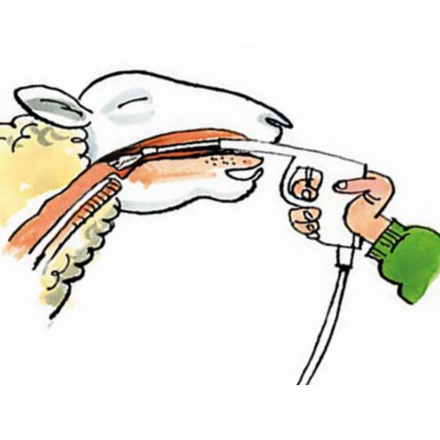
The drenching technique is a vital part of ensuring that the wormer does its job effectively.
Make sure the sheep are properly restrained and cannot leap around when they are being drenched so they swallow the whole amount.
Sheep can also suffer serious injury, or even death, if they are unrestrained and the gun penetrates the tissues at the back of the mouth.
Place a hand under the head and tilt slightly to the side.
Slot the nozzle in the gap between molar and incisor teeth and then over the back of the tongue.
If the wormer is just put into the mouth, it will bypass the rumen as it escapes down the oesophageal groove and will be less effective.
This is particularly important for white (BZ) drenches.
Dosing Weigh – do not guess Underestimating the weight of sheep is a common cause of underdosing. Select and weigh the biggest sheep in the group to determine the correct dose. If there is a wide range of weights, consider splitting the group, then weigh the heaviest in each section. Do not forget to check that the weigh crate is accurate before starting!
Calibrate and maintain the drench gun
Always check the gun is delivering the right amount before you drench. Remove the plunger from a 10 ml syringe, put a thumb over the end and squirt the dose into it, making sure there are no air bubbles left. Adjust the gun until the dose delivered is correct. Drenching guns should also be well maintained and replaced regularly. Clean with warm soapy water after use and check springs and tubes to make sure there are no kinks that will form air bubbles.
Withholding food
Research has shown that the efficacy of the white (BZ) and clear (AV) drenches can be improved by withholding food for 12–24 hours before treatment. It is not advised to deprive heavily pregnant ewes of food, so if you treat this class of stock with anthelmintics, you may wish to use yellow drenches (LV) because their efficacy is less dependent on rumen fill.
Storage
Wormers should be stored securely, away from direct sunlight at 4–25°C. Check the use-by date and, once open, use within the time shown on the packaging. Shake white (BZ) products well before use.
Cattle Oral drenches
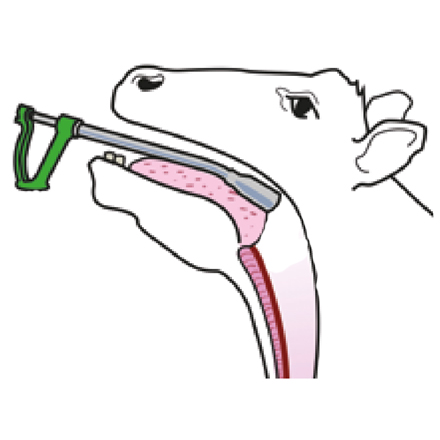
Oral drenching guns are designed to deliver the treatment towards the back of the mouth over the tongue, so the entire dose is swallowed at once to optimise efficacy.
• Make sure animals are properly restrained, with their head held up
• Slide the nozzle of the dosing gun in the side of the mouth and over the tongue so that the entire dose is swallowed immediately
• Drenching equipment must be correctly calibrated and in good working order
• Calibrate the gun using the product just before treatment starts by delivering two or more doses into a graduated measuring cylinder.
Faulty equipment, or attempting to dose too quickly, may mean that the barrel of the gun does not fill properly or that the liquid is full of bubbles.
Bovicox 50 mg/ml oral suspension for cattle and sheep and is used in the treatment and prevention of coccidiosis (caused by Eimeria bovis or Eimeria zuernii) in calves,cattle and sheep. Bovicox is a market replacement for Vecoxan . Coccidiosis is a very costly disease that causes severe sickness and even death in cattle, Bovicox not only treats this disease but can also prevent your herd from contracting it in the first place.
Active Ingredients
Toltrazuril
Target Species
Cattle and Sheep
Application Method
For oral use.
Withdrawal Period
Cattle: Meat and offal: 63 days.
Not authorised for use in animals producing milk for human consumption.
Sheep: Meat and offal: 42 days.
Not authorised for use in animals producing milk for human consumption.
Legal Status: POM
Delivery Information
- Fast Nationwide Delivery (Ireland)
- Standard Delivery - orders under €129 are €6.99
- Free Shipping for orders over €129
- Typically 2-4 days for delivery
Note: Some products may have an extra heavy/bulk delivery charge; this will be noted on the product page.
Delivery Service
Here at Agridirect we have joined forces with An Post & DPD to ensure all packages are delivered promptly and safely to you. We ship to all mainland countries within the EU. Deliveries take place Monday to Friday, excluding bank holidays. Once your order has been dispatched from our warehouse, you will be notified by email. If there is a delay with your order for any reason, you will be contacted immediately.
Delivery Times
- Ireland (ROI & NI) - 2-4 Working Days
- EU (Mainland Only) - 4-6 Working Days
Some products have an extended delivery time, this is noted on the products.
Delivery Rates
- Country - Delivery Charge
- Ireland (ROI & NI) - €6.99
- Austria - €39.99
- Belgium - €36.99
- Czech Republic - €39.99
- Denmark - €39.99
- Finland - €51.99
- France - €36.99
- Germany - €36.99
- Hungary - €43.99
- Italy - €49.99
- Luxembourg - €36.99
- Netherlands - €36.99
- Poland - €36.99
- Portugal - €51.99
- Slovakia - €43.99
- Slovenia - €43.99
- Spain - €49.99
- Sweden - €49.99
A selection of the products we sell are only licensed for sale within the Republic Of Ireland and can not be shipped outside of the country. These products are noted as only being available within the Republic of Ireland on the individual product pages.
Note: There may be an additional charge on certain bulky items. This charge will be clearly marked on applicable products and will be explained on the checkout page before payment has been made.
Returns Policy
We’re sorry your purchase didn’t work out. But don’t worry; we have a great returns policy to help you out.
All purchases can be returned to us within 14 days of delivery, and returned goods must be received within 14 days from the date you informed us of the return.
Purchases may be opened for inspection but must not be used and must be repackaged securely in the original packaging if you wish to return it.
If we discover goods have been used or there has been a loss in value of the goods due to damage to the goods while in your care or whilst being returned to us, we will reduce the amount refunded, which may amount to the full cost of the product, to cover the loss of value of the goods.
All returns should be complete, which includes boxes, manuals, and accessories that may have been included with the order.
All returns must be packaged appropriately for shipping; we will not accept responsibility for damages or loss that occurs during shipping of a return product.
We accept no responsibility for goods damaged or lost while in transit to us.
How do I return a product?
We have partnered with DPD to make your returns process easy and secure. Simply follow the steps below and bring your package to an official DPD pickup point.
1) All returns must be accompanied with a fully filled out returns form which can be downloaded returns form PDF.
2) To print off your return label click DPD Returns page or visit www.dpd.ie/returns and follow the on-screen instructions. Make sure and use your order number as your reference.
- Select “Continue as Guest”
- Select “Agridirect” from the drop-down menu
- Select your reason for returning
- Select the size of the package you wish to return
- Accept DPD’s terms and conditions
- Fill in your payment details
- Fill in your own details
- Follow the instructions to print off your label
3) Bring your package to a DPD pickup point. To find your nearest drop off point DPD pickup shops.
Once the returned product has been received into our warehouse and been fully inspected a refund will be issued.
If you choose not to use the DPD returns service we recommend that you use a method that can be tracked.
For the return of bulk products please contact us at sales@agridirect.ie
I have received a damaged product from you, what should I do?
First off, if you have received a damaged electrical product from us, do not plug it in. Any electrical products that are plugged in are deemed ‘as used and accepted’ and are not accepted as returns. All damages must be reported to us via phone or email within 24hours of receipt of goods. Please ensure you check your items upon delivery.
How do I begin the returns process?
If you wish to begin the return process, please email us at sales@agridirect.ie and ensure the following information is included in your email. Your name, phone number, Order id, the item you wish to return, reason for return and if the product is damaged we require photos of the product.
Once you have sent us all required information a member of our team will assess your claim and will contact you as soon as possible. Please hold off on returning products until a member of our team has called you to confirm.
Refunds
Once the returned product has been returned to us and fully inspected a refund will be issued.
Please Note: A typical timeline for a refund to show in your account is up to 10 working days from the date processed, depending on your bank.